The JAM ART · Ritual · altar · devotional use

Ritual forms, described with care.

Religious, ritual, and memorial forms documented with attention to provenance, function, and uncertainty.

Interpretive claims should be treated as object notes, not final authority, unless supported by documented provenance or publication.

Divine Artistry cover object
Object records

Visual study and notes.

Click any image to enlarge it. Availability, condition, and documentation can vary by object.

Inventory · BO.06.012

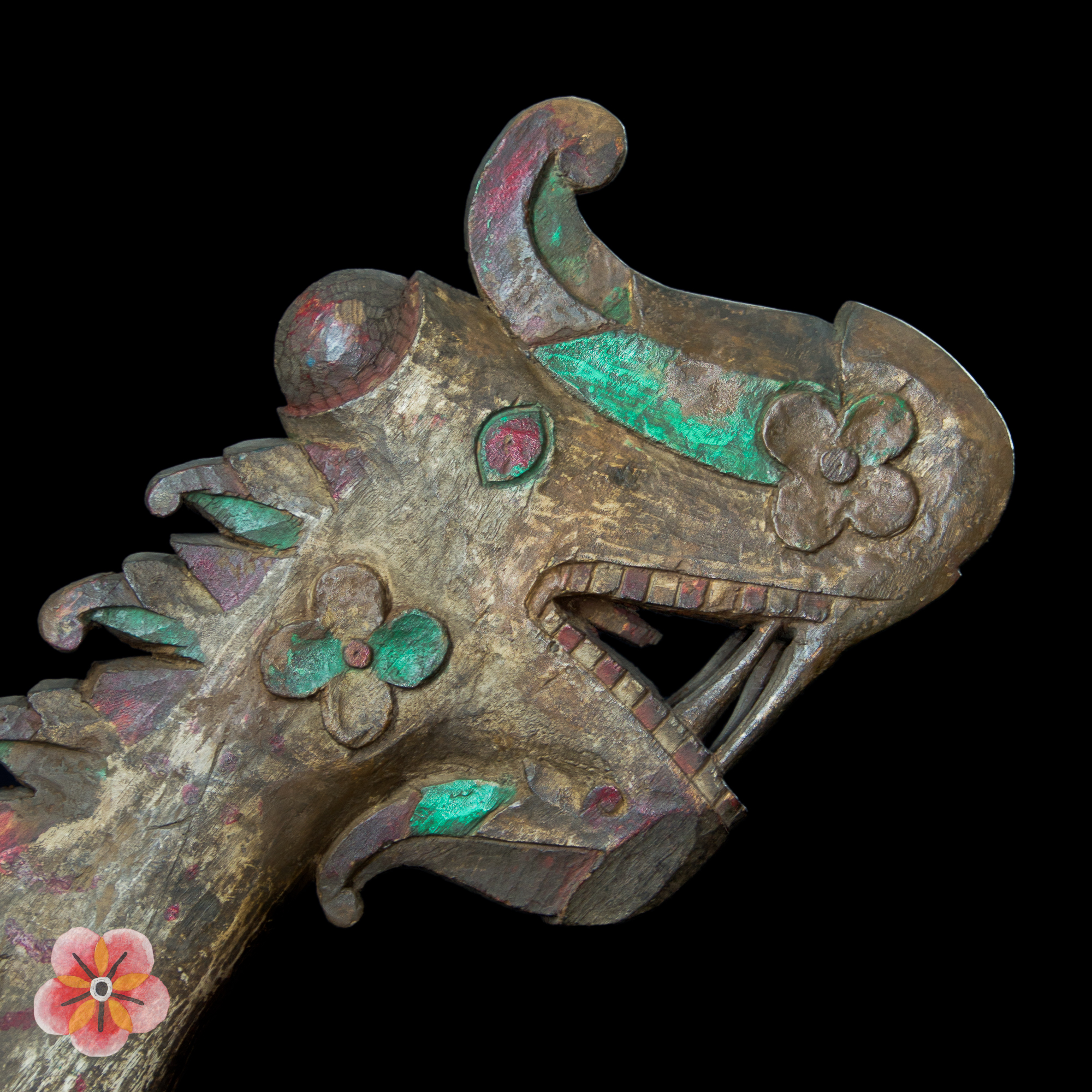
ritual Enchantment: Naga Sculpture from East Borneo

  • Ethnic: Dayak Benuaq
  • Material: Wood, polychrome, patina
  • Dimensions: 86 × 34 × 7 cm
  • Inv. BO.06.012

This notable sculpture coming from East Borneo and belongs to the Benuaq Dayak people. Crafted from wood and adorned with pigments and patina, it stands at an impressive size of 86 × 34 × 7 cm.

The sculpture represents a naga head, which served as the central element of a suspended altar used in purification and healing ceremonies. The naga, a significant figure in Dayak cosmologies, displays its characteristic large, open mouth with exposed fangs, symbolizing its potency and power.

Delicately carved spiralling leaves on the naga's back represent its pointy scales, adding to the sculpture's artistry and attention to detail. A distinctive decorative style is evident, where a lotus flower stands for an eye, reflecting the refined taste for composition.

A similar sculpture to this can be found in “Hornbill and Dragon” (pp. 421-422), showcasing the prevalence of such mythological representations in Dayak art. Additionally, an important reference for its unique decorative style can be found in a naga of the Brignoni Collection, published in "Patong" (pp. 32-33).

Inventory · BO.10.039

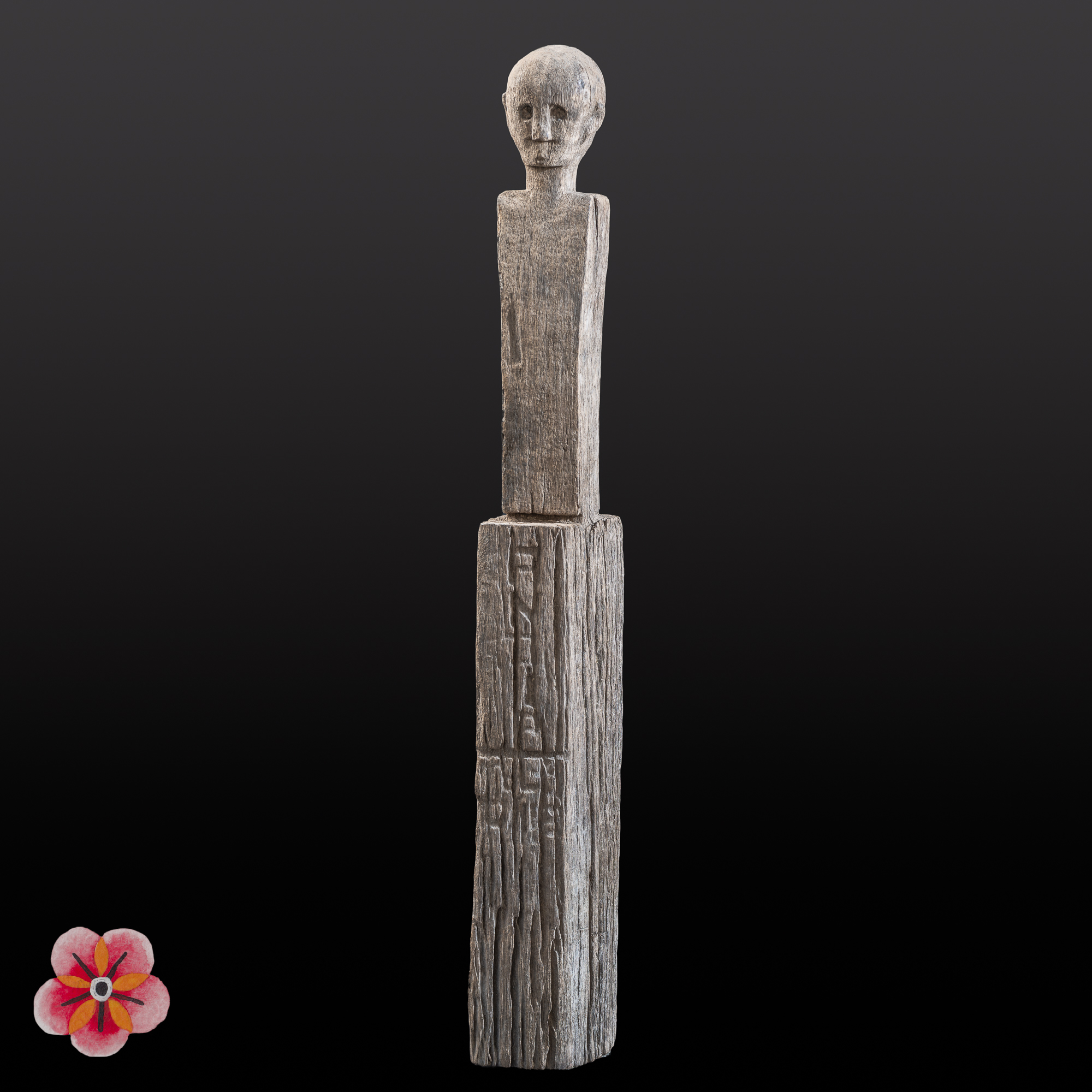
Effigy of Ancestor: Revered Memorial in Ironwood

  • Ethnic: Dayak Iban
  • Material: ironwood, patina
  • Dimensions: 65.5 × 8 × 8.5 cm
  • Inv. BO.10.039

This unusual effigy originates from West Borneo and is associated with the Ibanic Dayak complex. Meticulously carved from ironwood, it stands at a height of 65.5 cm with dimensions of 8 × 8.5 cm.

The effigy serves as a significant representation of an ancestor, exuding a strong and expressive presence. Its purpose was to mark and honor a burial place, signifying the reverence and importance attributed to the deceased.

These notable sculptures were commonly placed inside caves, offering protection from atmospheric agents and preserving their cultural significance for generations to come.

The effigy's detailed craftsmanship reflects the deep respect and connection the Ibanic Dayak people have with their ancestors. It stands as a powerful memorial, embodying the essence and memory of the departed.

Inventory · BO.10.040

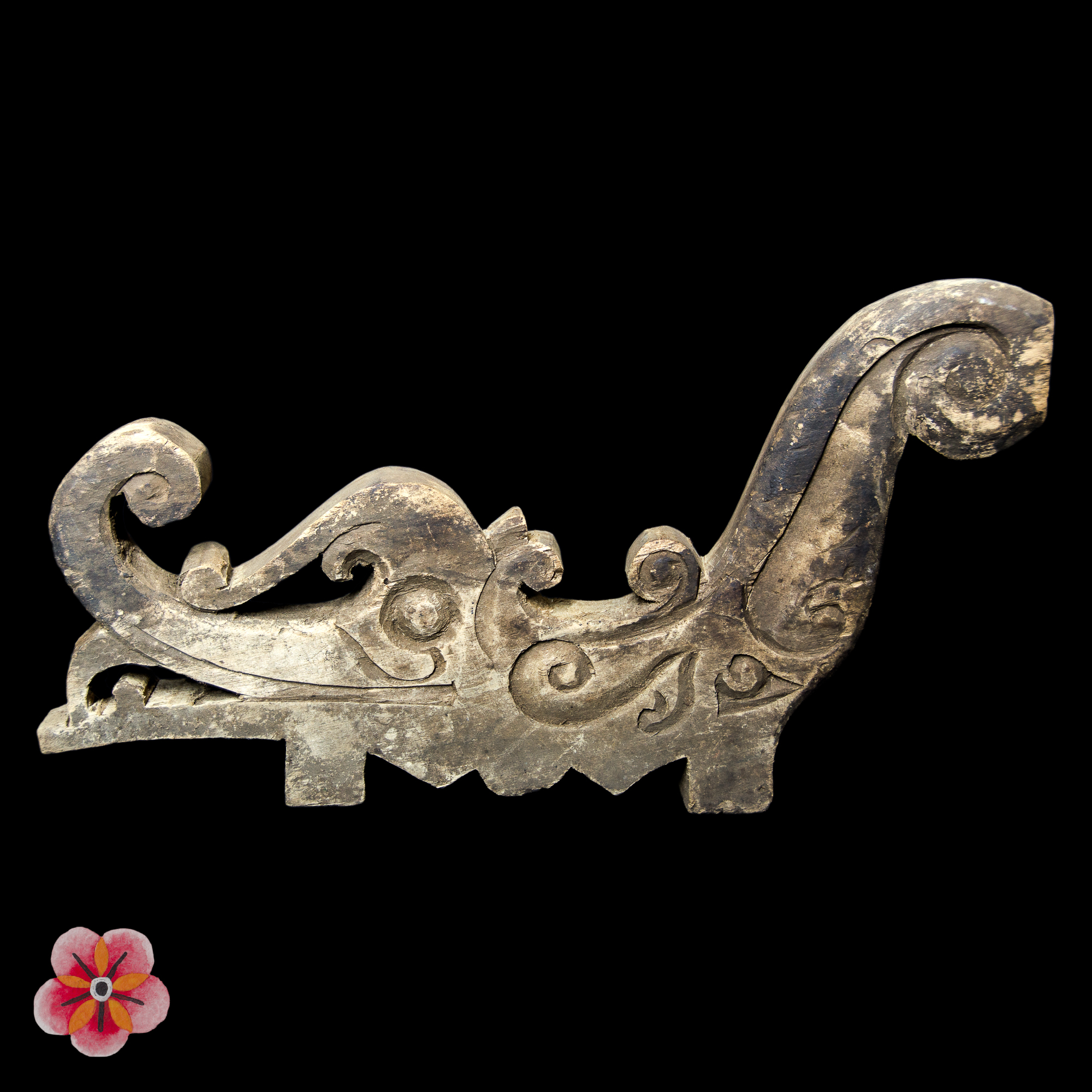
Guardian Dragon-Dog Figure: Protective Amulet of Ibanic Dayak

  • Ethnic: Ibanic Dayak complex
  • Material: light wood
  • Dimensions: 19.5 × 38 × 3.5 cm
  • Inv. BO.10.040

This notable sculpture originates from West Borneo and belongs to the Ibanic Dayak complex. Skillfully crafted from soft wood, it stands at a modest size of 19.5 × 38 × 3.5 cm.

The sculpture represents a guardian divinity in the form of a dragon-dog, known as “aso'”. Characterized by its flat body adorned with intricate high relief carvings, this figure holds significant importance in Ibanic Dayak beliefs.

Though relatively small, it is likely that this sculpture served as an amulet, designed for indoor use to provide protection and ward off malevolent forces. The guardian dragon-dog is highly revered for its apotropaic function, safeguarding the household and its inhabitants from evil spirits and negative energies.

The exceptional artistry and attention to detail in this figure exemplify the skill and creativity of the Ibanic Dayak artists. The flat body of the sculpture adds to its uniqueness, setting it apart from other three-dimensional representations often found in larger guardian figures.

Inventory · BO.10.041

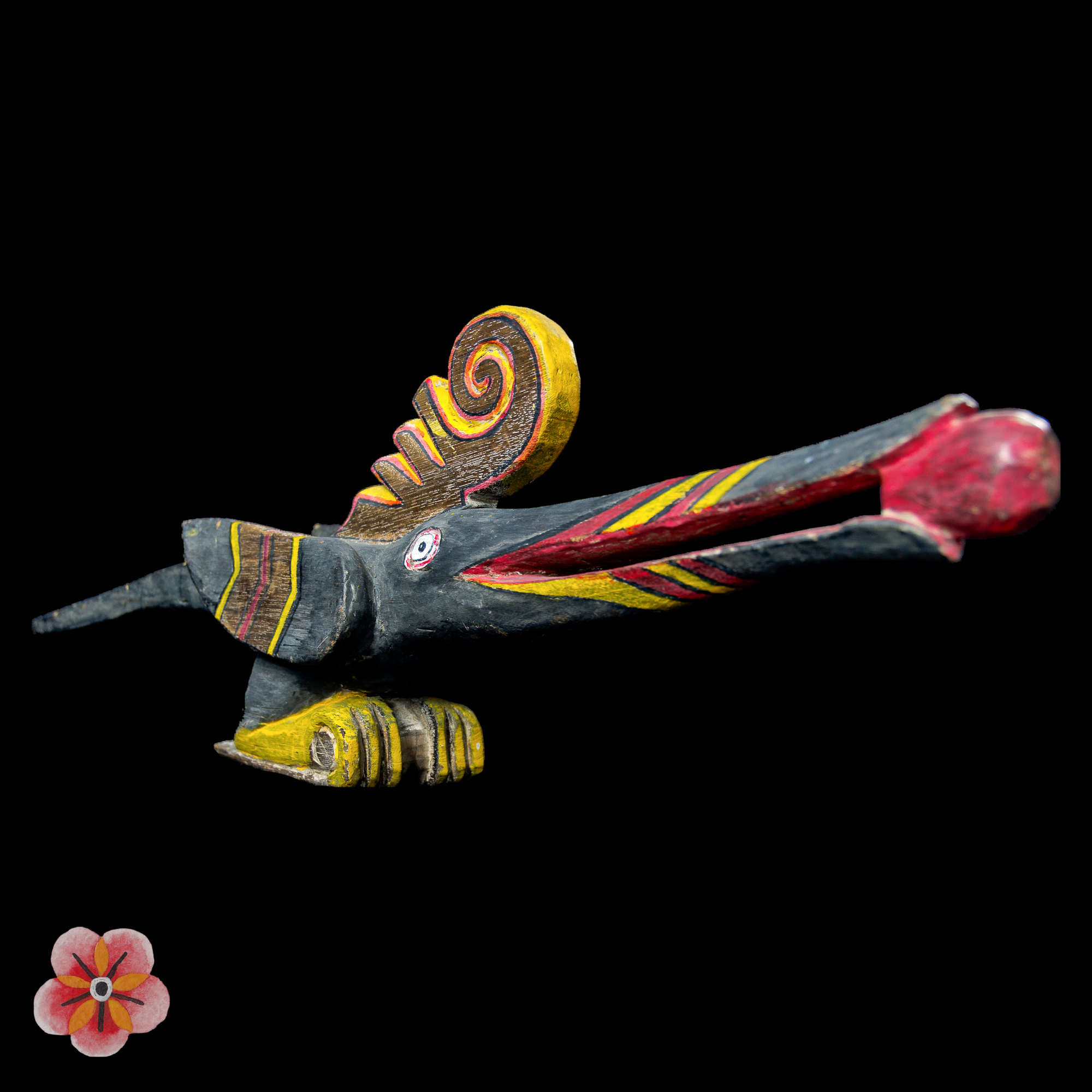
Kenyalang: Symbol of Divine Power Among the Ibanic Dayak

  • Ethnic: Dayak Iban
  • Material: wood, polychrome
  • Dimensions: 23.5 × 78 × 9 cm
  • Inv. BO.10.041

This notable wooden sculpture hails from West Borneo and belongs to the Ibanic Dayak complex. Standing at a size of 23.5 × 78 × 9 cm, it represents a rhinoceros hornbill, known as “Kenyalang” in the local language. Among the Iban people, the Kenyalang holds significant symbolism as the God of Warfare and is considered an emblem of supreme divinity.

The Kenyalang has been widely described and documented in various publications, such as “Iban Art” and "Hornbill and Dragon." This small-sized example, like the one presented here, can be found in "Iban Art" (p. 146). The bird's bill is regarded as the most crucial and powerful part of the figure, as it was believed to blind spiritual enemies. During ceremonies, the Kenyalang would be carried through the house to spread prosperity, and it would also be placed at the top of poles, where its invisibility was deemed desirable for catching enemies by surprise.

Despite its simplicity in formal design, this Kenyalang holds immense cultural significance. As a smaller representation, it might have been placed inside the clan house on ceremonial mats or on short poles during various rituals and events.

The vibrant dyes used in its decoration add an eye-catching touch to the sculpture, making it a notable and cherished piece among the Ibanic Dayak community.

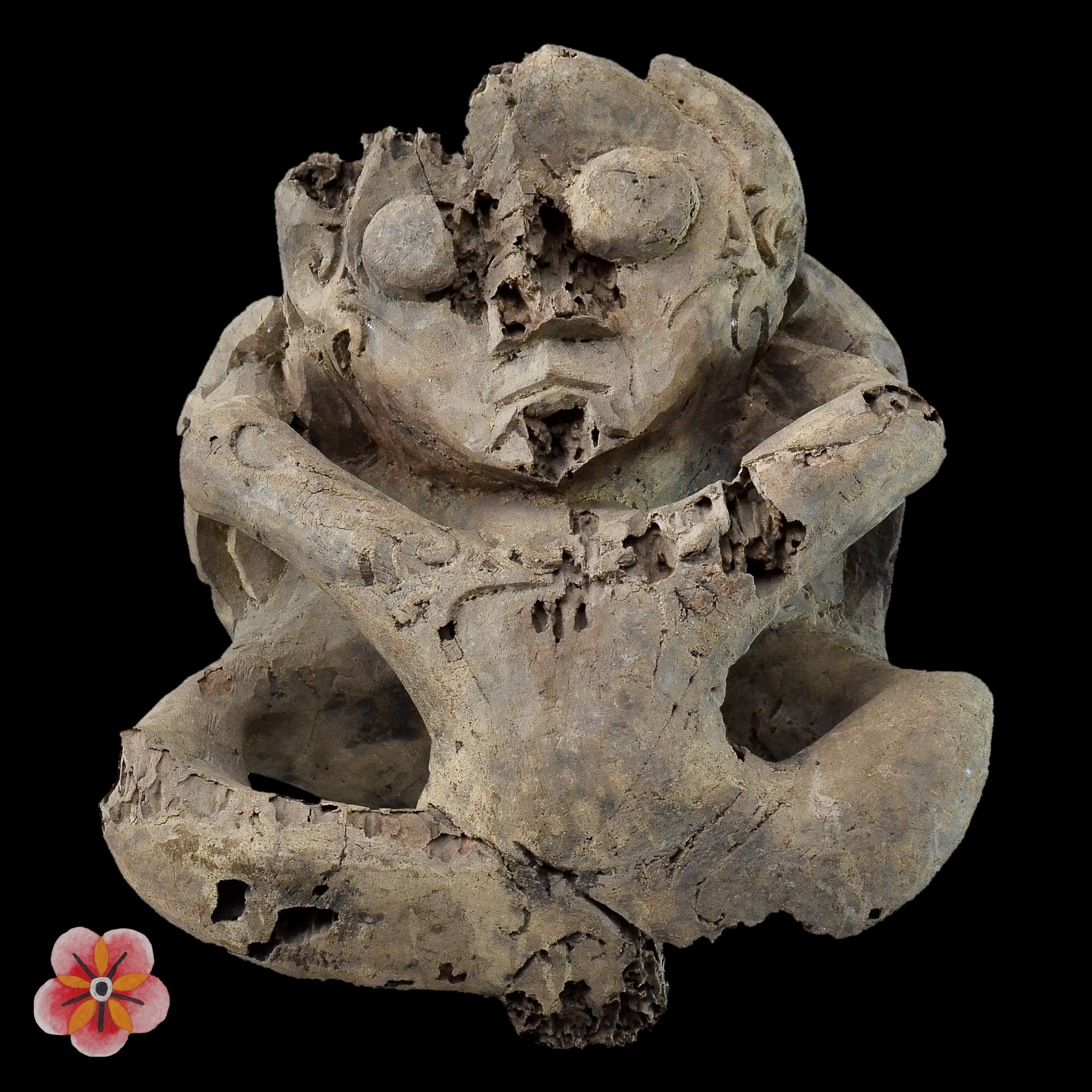
Inventory · BO.12.055.A

Ancient Fragment of Sarcophagus: Guardian Divinity from Central-East Borneo

  • Ethnic: Dayak Tunjung
  • Material: Wood
  • Carved depiction: divinity figure
  • Dimensions: 48 × 53 × 51 cm/span>
  • Inv. BO.12.055.A

This notable fragment of a sarcophagus hails from the Bahau Dayak people of Central-East Borneo. Carved from wood, the fragment measures 48 × 53 × 51 cm and offers a glimpse into the significant beliefs and artistry of the Dayak culture.

The sculpture portrays a powerful guardian divinity, a figure with significant roles in Dayak spirituality. Among its functions, this divinity was believed to accompany the souls of the deceased to the afterlife and serve as a protective guardian over individuals.

Such representations are rare and hold a prominent place in Dayak art. Notably, publications like “The Eloquent Dead” (p. 105, 111) and "Patong" (p. 124) showcase similar examples, emphasizing their vital function and formal appearance. The divinity's potency is expressed through its large convex eyes and an open mouth, revealing sharp fangs.

This fragment of the sarcophagus displays a heart-shaped face, adorned with large globular eyes and a mouth adorned with two fangs. Spirals on the temples further enhance the figure's presence. Unique stylized incisions on the body, reminiscent of tattoos, add intricate details to the sculpture. Notably, the distance between the body and the surface behind it is marked by a contortion of the figure itself, exuding a sense of boundless energy.

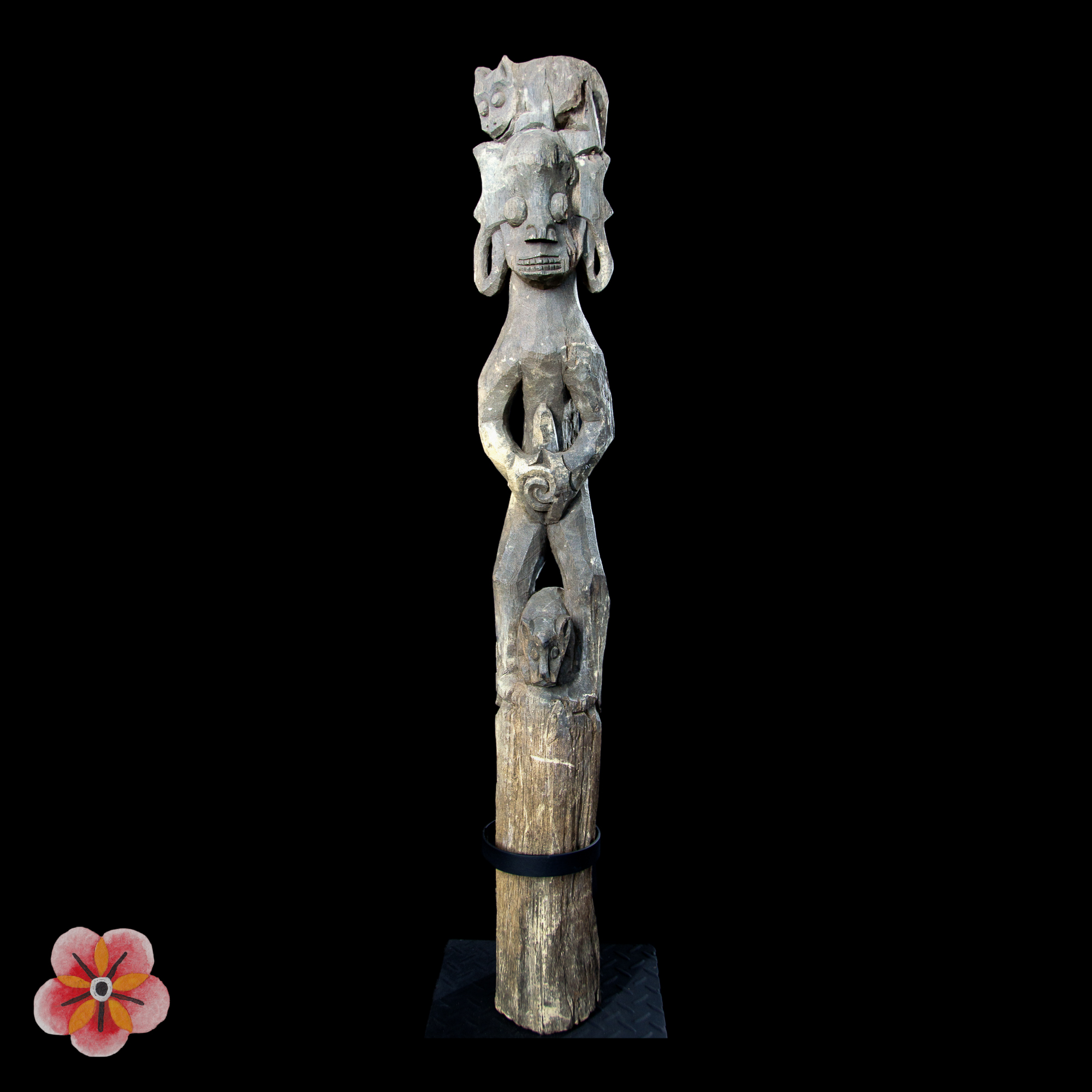
Inventory · BO.12.058

Patunk: Protective Anthropomorphic Figure from East Borneo

  • Ethnic: Dayak Benuaq
  • Material: ironwood
  • Dimensions: 91 x 10.5 x 13.5 cm
  • Inv. BO.12.058. Ex private collection

This notable anthropomorphic figure, known as “Patunk,” originates from the Benuaq people of East Borneo. Carved from ironwood, the sculpture stands at 91 x 10.5 x 13.5 cm, embodying the cultural significance and artistic mastery of the Benuaq community.

The figure's ferocious face and robust body exude a powerful expression, reflecting its primary purpose as a guardian against malevolent spirits. The great bulging eyes and open mouth, displaying two rows of sharp teeth, further emphasize its protective nature, warding off any potential threats.

An intriguing aspect of this sculpture lies in the animal canine-like features positioned atop the figure's head and at its feet. These symbolic elements are believed to represent family spirits, indicative of the syncretism between neighboring ethnic groups. Such connections are often strengthened through kinship ties, fostering a harmonious relationship between communities.

The Patunk figure is an embodiment of the Benuaq people's deep spiritual beliefs and the artistic brilliance of their craftsmanship. It serves not only as a guardian against malevolent forces but also as a cultural testament to the rich tapestry of traditions and beliefs within the East Borneo region.

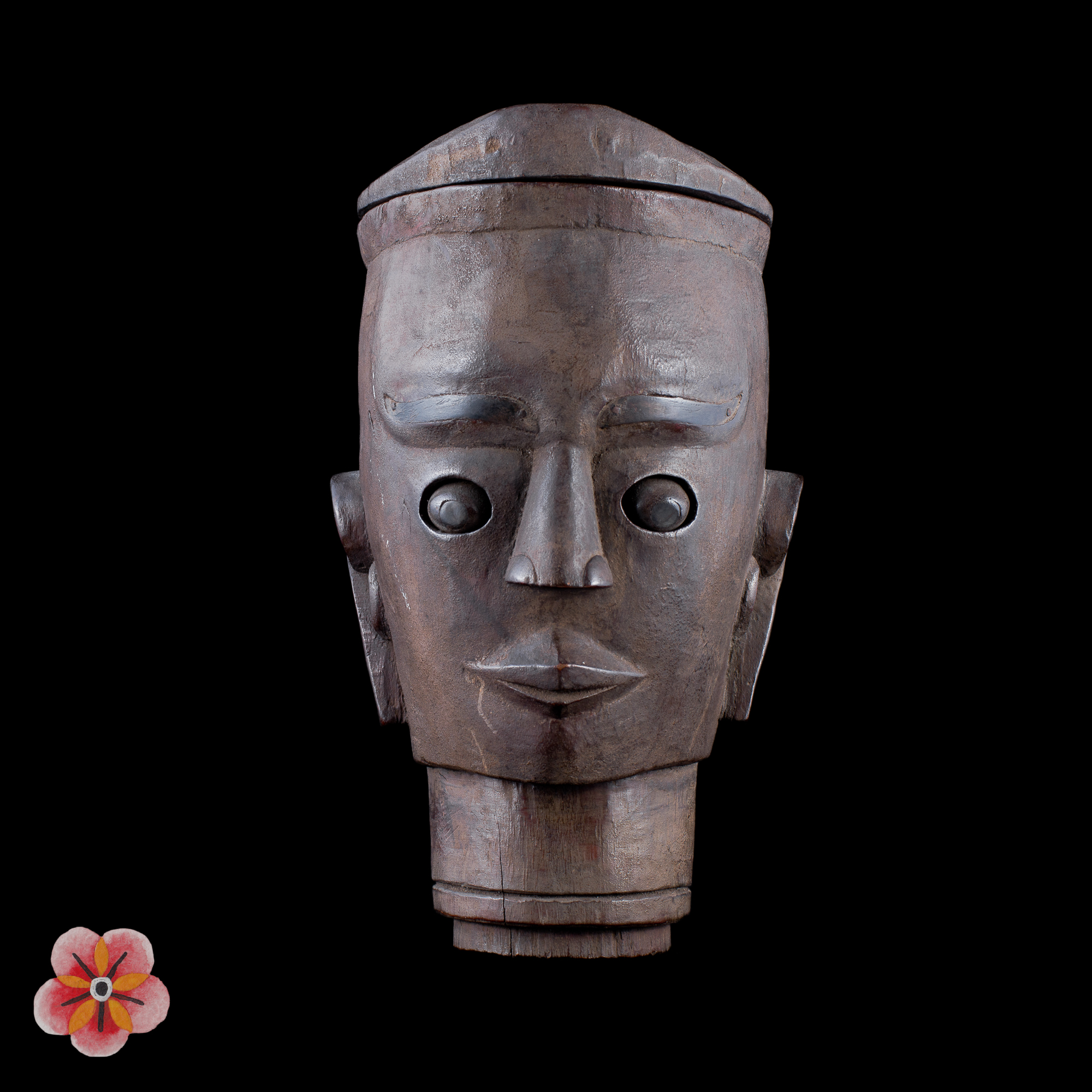
Inventory · TO.15.001

Puppet Head “Si Gale Gale”

  • Ethnic: Batak Toba
  • Material: Wood, paint
  • Dimensions: 29 × 16 × 17 cm
  • Inv. TO.15.001

A similar puppet head can be found in the collections of the Metropolitan Museum of Art (New York, inv. 1987.453.6). Both puppet heads share comparable representation of facial features, indicating the work of skilled sculptors from the same school.

The Toba Batak people of northern Sumatra have a notable tradition of creating sophisticated puppets that played a significant role in funerary ceremonies. The puppet head presented here once belonged to a near-life-sized puppet operated by an intricate system of internal strings and levers, allowing it to move in a lifelike manner. Within this head lies a complex internal mechanism controlled by strings, enabling the figure to move its eyes and even produce tears - achieved by using wet moss or sponges kept inside the head that could be squeezed, allowing the puppet to weep for the departed.

This puppet head stands out for its exceptional expressive quality, a rare characteristic found in specimens from the first half of the 19th century. It shows the mastery of Batak Toba artists in creating intricately designed and emotionally evocative puppets for their traditional ceremonies.

Responsible access

For study, collecting, or careful inquiry.

Please include the object name or inventory reference when contacting The JAM ART. Documentation and availability are confirmed object by object.