The JAM ART · Panels · doors · carved surfaces

Carved surfaces and architectural memory.

Panels, doors, and larger wood surfaces presented through form, material, scale, and architectural presence.

Where ritual or architectural use is not fully documented, the description remains careful and limited.

Artistic Woodcrafts cover object
Object records

Visual study and notes.

Click any image to enlarge it. Availability, condition, and documentation can vary by object.

Inventory · BA.11.001

Wooden Panel Depicting Boma: The Apotropaic Demon and King of the Forest

  • Ethnic: Balinese
  • Material: wood, polychrome
  • Carved depiction: apotropaic demon figure and floral Motifs
  • Dimensions: 29 × 163 × 4 cm
  • Inv. BA.11.001

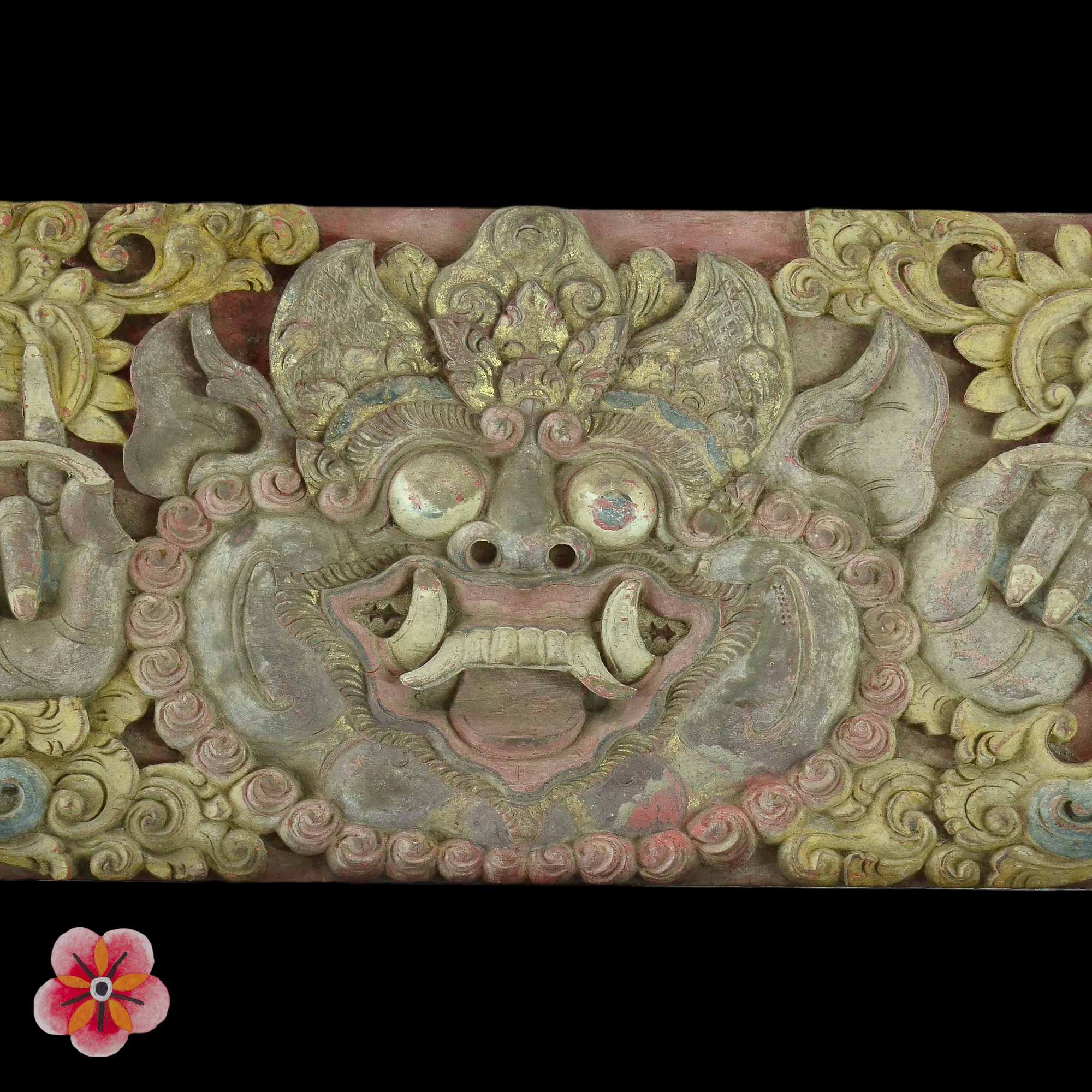
This well-made wooden panel from Bali and shows the depiction of Boma, a significant figure in Balinese mythology. Boma is an apotropaic demon and revered as the king of the forest, entrusted with the responsibility of warding off evil spirits known as butha kala from the earthly realm.

The presence of Boma can commonly be observed at temple entrances, within Balinese homes' rooms, on the rear of cremation towers, and certain altars. Known for his immense strength, Boma possesses the ability to conquer both physical and spiritual obstacles found in the earthly world. He is recognized as the son of the revered god Wisnu and the earth goddess Pratiwi.

This notable relief holds great significance, originating from an aristocratic context. It represents the epitome of Balinese sculptural craftsmanship, characterized by its vibrancy, elegance, and intricate detailing. The panel stands as a testament to the rich artistic tradition and cultural heritage of Bali.

Inventory · BA.11.002

Boma: The Apotropaic Demon and King of the Forest - Wooden Panel from Bali

  • Ethnic: Balinese
  • Material: wood, polychrome
  • Carved depiction: apotropaic demon figure and floral Motifs
  • Dimensions: 28 × 163 × 5 cm
  • Inv. BA.11.002

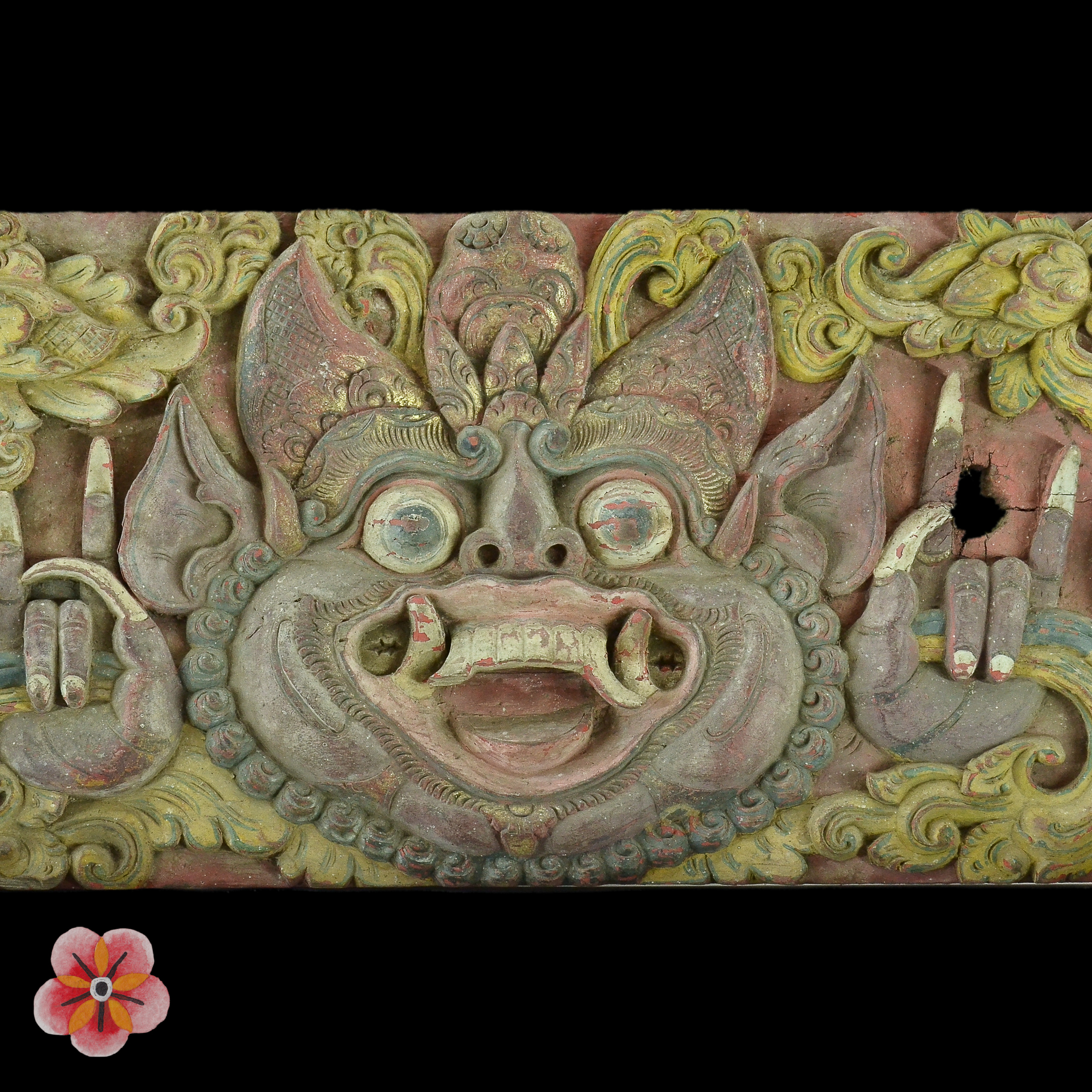
This well-made wooden panel from Bali features a notable depiction of Boma, a significant figure deeply rooted in Balinese mythology. Boma, an apotropaic demon, is revered as the mighty king of the forest, entrusted with the sacred duty of warding off evil spirits known as butha kala from the earthly realm.

Boma's presence is commonly observed at temple entrances, within the rooms of Balinese homes, on the rear of cremation towers, and certain altars. Renowned for his immense strength, Boma possesses the power to conquer both physical and spiritual obstacles that may arise in the earthly world. He holds a significant place in Balinese mythology and is recognized as the son of the revered god Wisnu and the earth goddess Pratiwi.

This notable wooden relief holds significant cultural and artistic significance, originating from an aristocratic context. Its vibrant and elegant design, characterized by intricate detailing, represents the epitome of Balinese sculptural craftsmanship. This wooden panel stands as a large testament to Bali's rich artistic tradition and cultural heritage, celebrating the enduring legacy of Boma, the apotropaic demon and king of the forest.

Inventory · BA.11.003

well-made Wooden Sculpture from Bali: A longstanding Representation of Serenity

  • Ethnic: Balinese
  • Material: wood, polychrome
  • Dimensions: 192 × 39 × 9 cm
  • Inv. BA.11.003

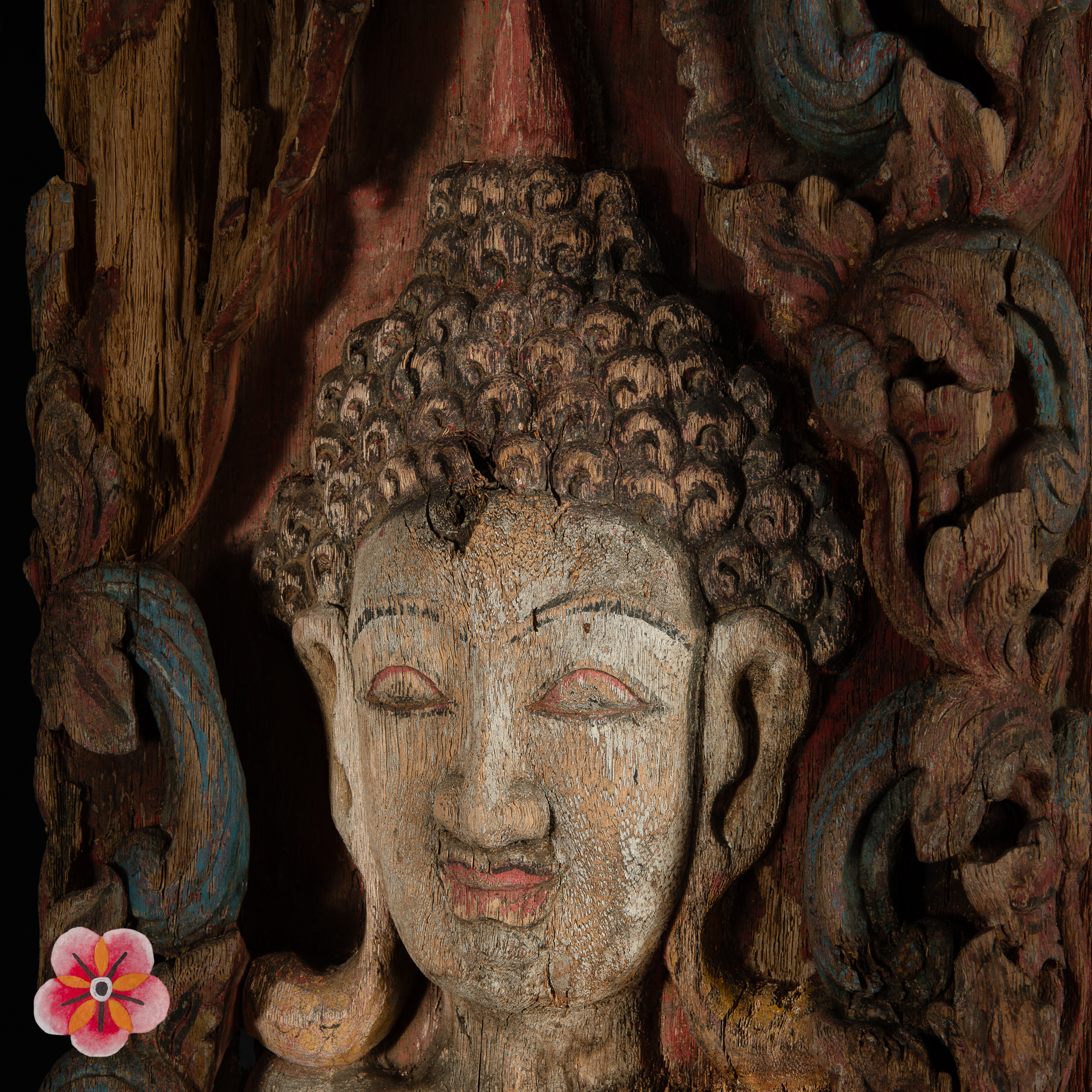
This wooden sculpture from Bali is a complex work, notable viewers with its strong artistry. The vibrant colors and intricate details of the statue beautifully depict a serene figure in a meditative state, emanating an aura of inner peace and tranquility.

Carefully placed within a niche adorned with flowers and lianes, the sculpture takes on a deeper symbolism. The flowers symbolize the concept of impermanence, reminding us of the fleeting nature of life, a fundamental concept in Buddhism. The lianes represent the interconnectedness of all things, emphasizing the unity and interdependence of existence. Together, these elements create a harmonious environment that complements the overall ambiance of the sculpture.

Crafted from light wood, the material itself brings a warm and natural essence to the design. Wood holds significance in spiritual art, symbolizing the impermanent nature of life and the transient journey we all traverse.

The figure's standing position is a longstanding pose frequently portrayed in spiritual art. It signifies stability, groundedness, and an openness to the world, symbolizing the willingness to engage with the complexities of existence.

Inventory · BA.11.004

The Balinese Parvati Sculpture: A work of Grace and Beauty

  • Ethnic: Balinese
  • Material: wood, polychrome
  • Dimensions: 198 × 36 × 7 cm
  • Inv. BA.11.004

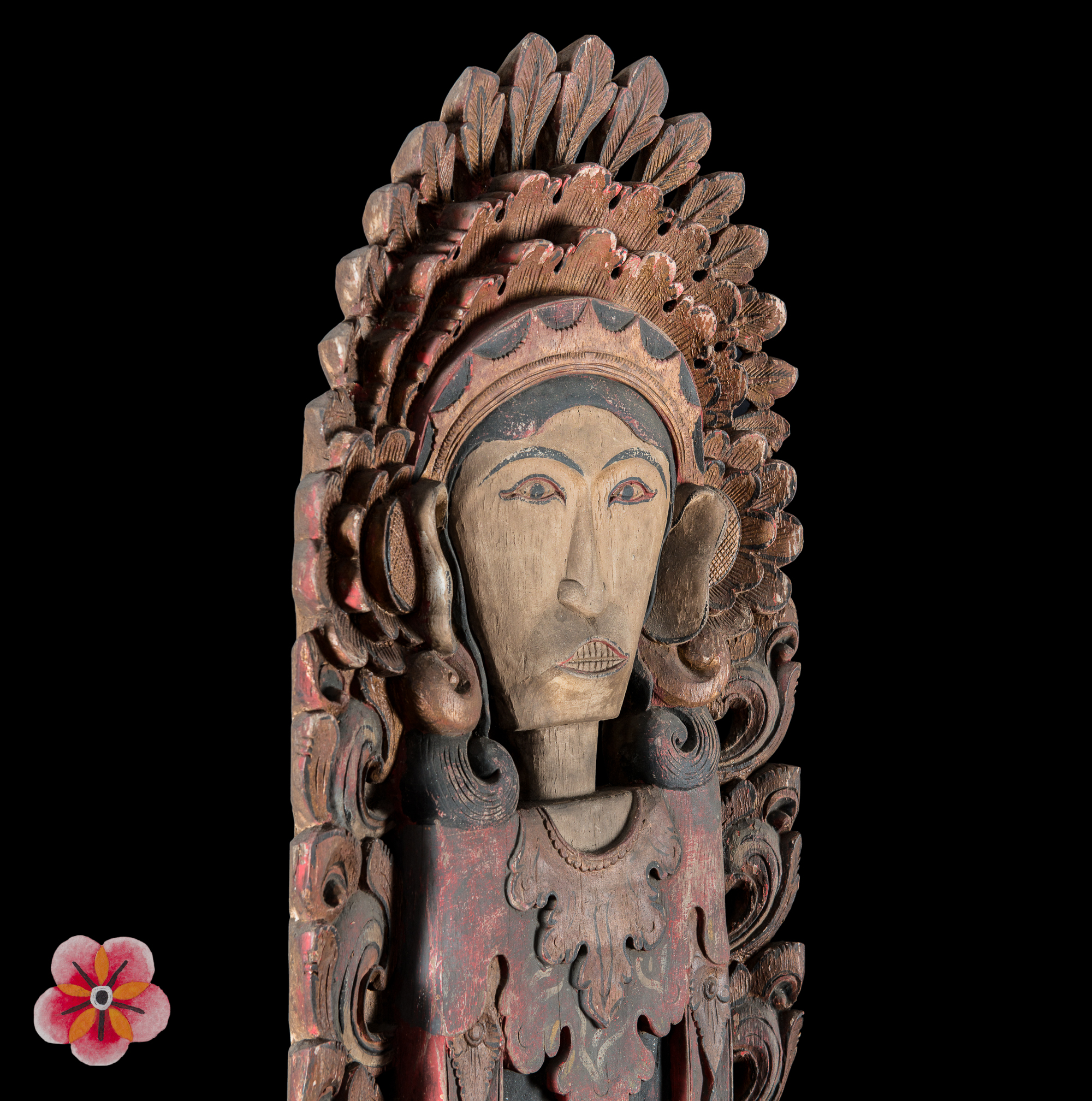
This notable wooden panel shows a well-made Balinese Parvati sculpture adorned with three layers of beautiful flowers. Representing the goddess Parvati, the beloved consort of Lord Shiva in Hindu mythology, this artwork exudes an aura of elegance and devotion.

The sculpture's intricate details and artful decorations reflect the rich cultural heritage of Bali, a place renowned for its expertise in sculpture and artistry. The carefully arranged flowers create a visually strong effect, with each layer contributing to the piece's depth and dimension.

As a testament to the Balinese people's skill and creativity, this Parvati sculpture stands as a work crafted with meticulous attention to detail. The flowers, delicately added to the design, bring a unique touch of beauty and grace to the artwork.

Parvati holds a special place in Hindu mythology, and this sculpture powerfully captures her grace and beauty. As the Balinese have a long history of worshipping Hindu deities, this artwork symbolizes their deep devotion and reverence for the goddess.

Inventory · BO.10.029

Clan House Door: Mythical Aso' Protectors in Surrealistic Style

  • Ethnic: Dayak Modang
  • Material: light wood patina
  • Dimensions: 194 × 75.5 × 13 cm
  • Inv. BO.10.029

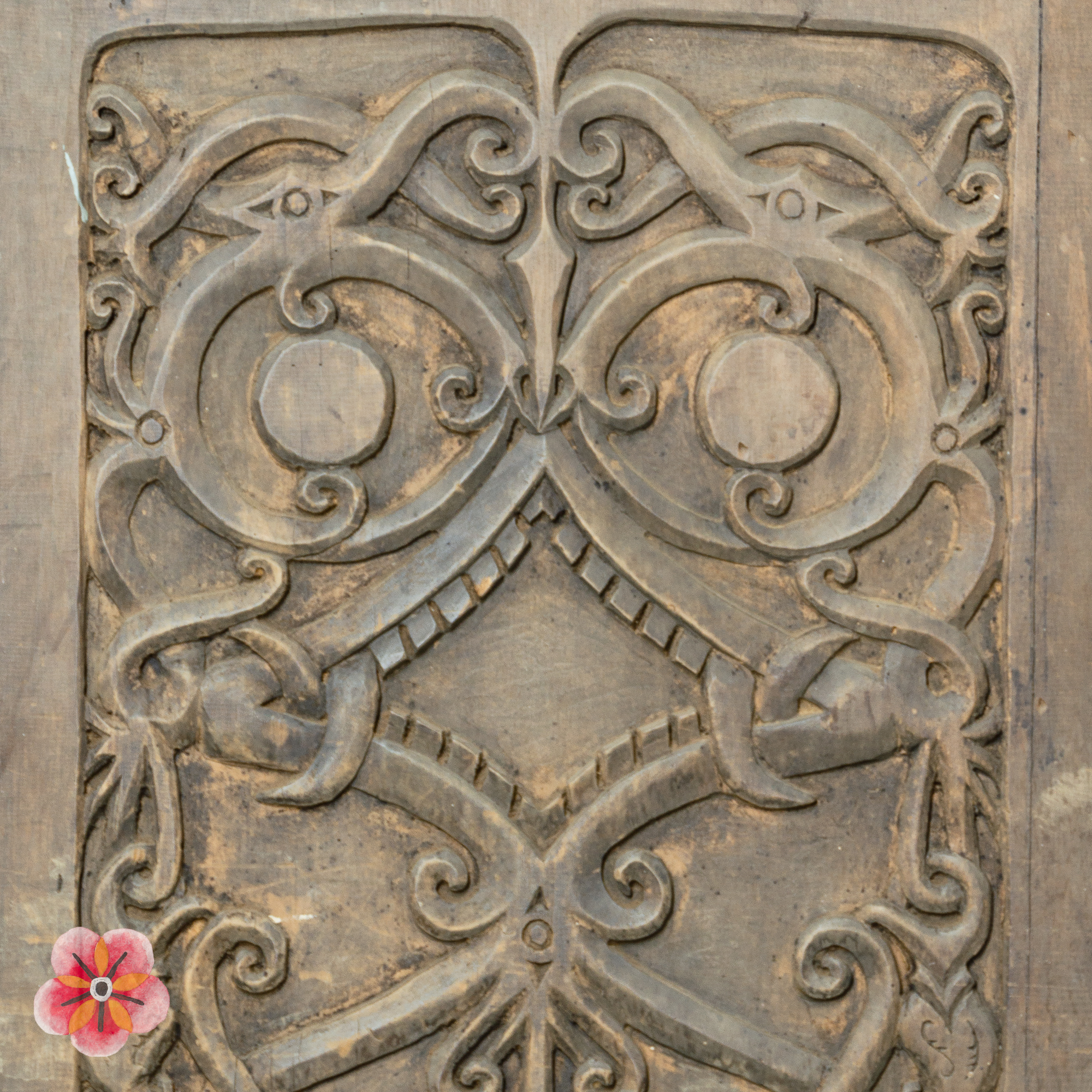
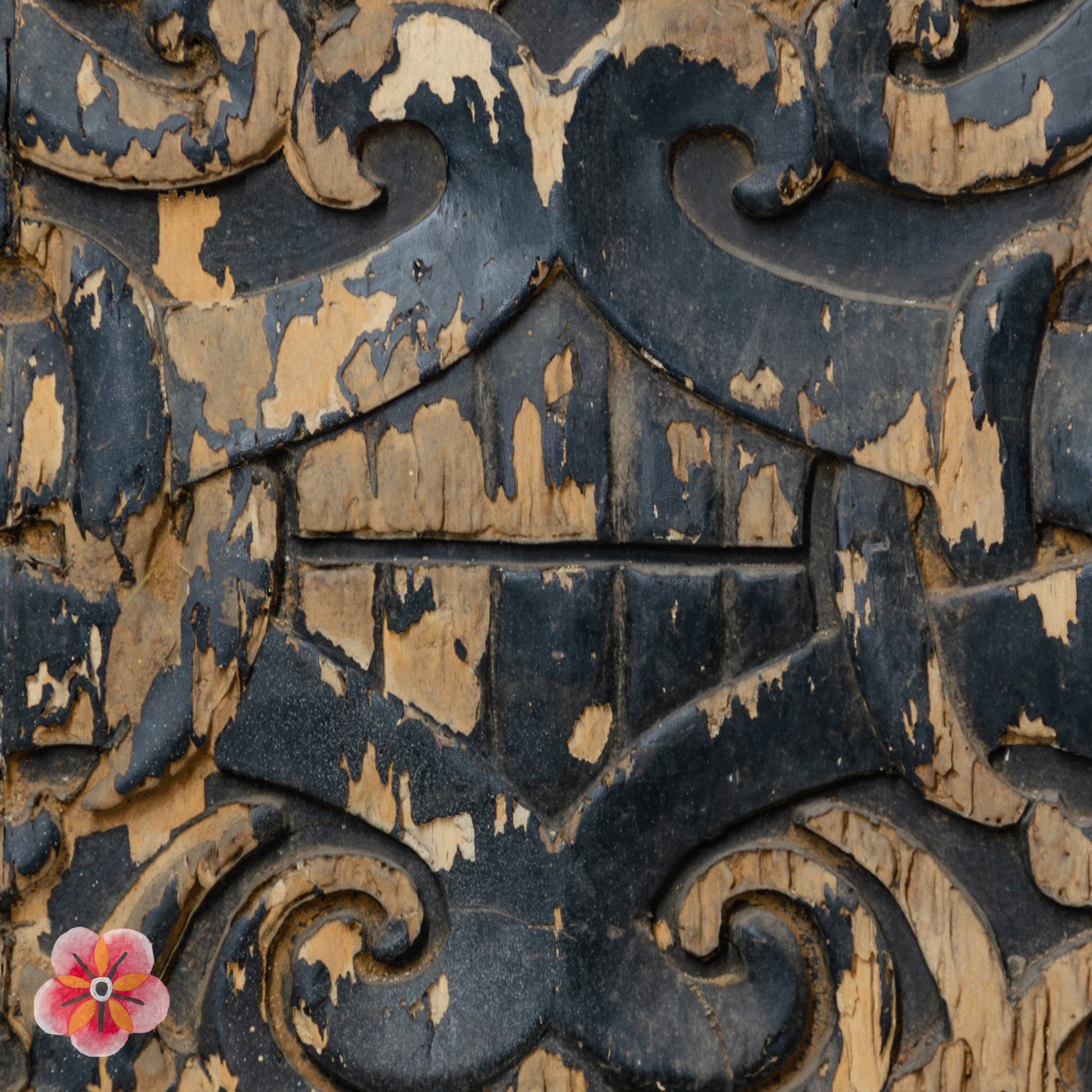
This impressive wooden door originates from East Borneo and belonged to the Modang Dayak people. Measuring 194 x 75.5 x 13 cm, it once marked the entrance to the apartment of a high-ranking dignitary within a clan house.

The door's notable design features a multitude of mythical aso' protectors, skillfully hybridized with various animals. Sinuous forms and symmetrical patterns dominate the composition, creating an intricate and notable visual display.

Notably, the massive handle takes the form of a dog-bear, adding to the door's unique and symbolic elements. The surface of the door shows an exceptional face of a protective divinity portrayed in a surrealistic style. The features of the divinity are composed of dog-dragons, with two stylized aso' forming the nose and two combined heads with open mouths of dog-dragons forming a mouth exhibiting menacing fangs. Completing the face are globular eyes with a denticulate perimeter, adding to the overall ritual appearance.

It is important to note that the door is in a used condition and may require revision or restoration to preserve its intricate craftsmanship and cultural significance.

Inventory · BO.10.030

Clan House Door: Elaborate Carving of a Guardian Divinity

  • Ethnic: Dayak Bahau
  • Material: Wood, patina
  • Dimensions: 198 × 63.5 × 4.5 cm
  • Inv. BO.10.030

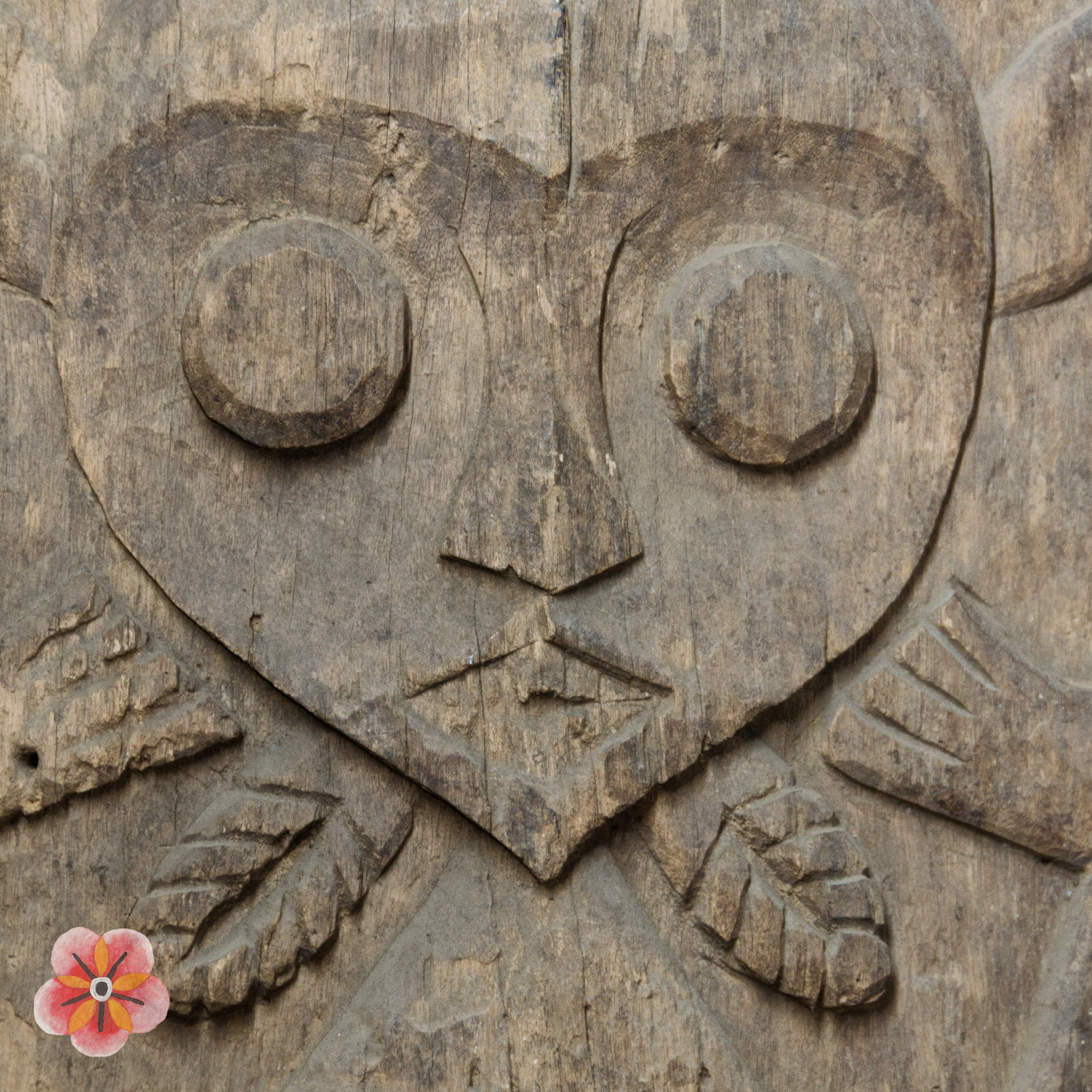
This unusual wooden door hails from East Borneo and belongs to the Bahau Dayak people. Measuring 198 × 63.5 × 4.5 cm, it serves as the entrance to a dignitary's apartment within a clan house.

The door's centerpiece is adorned with a notable and intricate relief carving representing a guardian divinity. The divinity's body is crafted with an asymmetrical composition of dragon-dogs (aso'), adding to the door's ritual and mythical appeal. The guardian divinity's large globular eyes are enclosed within concentric aso's, enhancing its powerful and protective presence.

As a significant cultural artifact, this clan house door exemplifies the Bahau Dayak people's artistry and spiritual beliefs. The elaborate carving of the guardian divinity shows the skilled craftsmanship and deep reverence for mythical beings and ancestral protectors. The door's symbolic design and rich cultural heritage make it a valuable piece of art, cherished for its historical significance and artistic expression. This exceptional clan house door stands as a testament to the Bahau Dayak people's artistic legacy and their belief in powerful guardian divinities.

Inventory · BO.10.031

Sarcophagus Cover: Guardian Spirits of the Deceased

  • Origin: Dayak. Central-East Borneo
  • Material: Ironwood
  • Carved depiction: psychopomp figure
  • Dimensions: 224 × 60.5 × 17 cm
  • Inv. BO.10.031

This notable sarcophagus cover originates from Central-East Borneo and belongs to the Dayak people. Crafted from ironwood, it measures 224 × 60.5 × 17 cm, making it a large, heavy, and substantial piece.

The cover is adorned with a striking double depiction of squatting spirits, likely serving as guardians to the soul of the deceased. These guardian spirits are believed to watch over and protect the departed as they journey into the afterlife.

As an important cultural artifact, this sarcophagus cover reflects the Dayak people's beliefs and rituals surrounding death and the afterlife. The intricate and meaningful depiction of guardian spirits shows the community's reverence for ancestral spirits and their strong connection to their cultural heritage.

The substantial size and weight of the sarcophagus cover underscore its significance in the funeral ceremonies and burial practices of the Dayak people. This sacred object serves as a tribute to the deceased, providing a final resting place that symbolizes the protection and guidance of the guardian spirits in their journey beyond.

Responsible access

For study, collecting, or careful inquiry.

Please include the object name or inventory reference when contacting The JAM ART. Documentation and availability are confirmed object by object.